Metal 3D printing has the advantage of manufacturing complex metal parts quickly and is used for prototyping and manufacturing low production volume metal parts. In this article, we will discuss various metal 3D printing technologies and the best metal 3D printer available in the market. Click this link!! for more information on various types of 3D printing technologies.
What is the purpose of Metal 3D Printer?
3D printing of metal parts is done for quick prototyping, manufacturing parts with complex features, and undercuts. Following are the application examples of metal 3D printing.
- Conformal cooling channels
- Lattice structures
- Lightweight brackets
- Internal manifolds
- Part consolidation
- Aerospace components
It is not recommended to use metal 3D printing for following applications:
- Simple machined blocks
- Turned shafts
- High-volume simple parts
- Flat plates
- Standard fasteners
Metal 3D Printing Materials
All metals that are used for conventional machining can not be 3D printed because of the limitations in metal 3D printing technologies. Following materials are widely used to 3D Print metal parts:
| Material Family | LPBF | EB-PBF | DED | WAAM | Binder Jetting | Metal Extrusion |
|---|---|---|---|---|---|---|
| Aluminum Alloys | ✓ | Limited | ✓ | ✓ | ✓ | Limited |
| Stainless Steels | ✓ | Limited | ✓ | ✓ | ✓ | ✓ |
| Tool Steels | ✓ | Limited | ✓ | ✓ | ✓ | Limited |
| Titanium Alloys | ✓ | ✓ | ✓ | ✓ | Limited | ✗ |
| Nickel Superalloys | ✓ | ✓ | ✓ | ✓ | Limited | Limited |
| Cobalt-Chrome | ✓ | Limited | ✓ | Limited | Limited | ✗ |
| Copper Alloys | ✓ | Limited | ✓ | ✓ | Limited | Limited |
| Refractory Metals | Specialized | Specialized | Specialized | Limited | Limited | ✗ |
Material compatibility is not just a printer specification. It is a material + process + parameter + post-processing combination.
Various types of metal 3D Printers
Most metal 3D Printing technologies utilize powdered metal to manufacture metal parts. These technologies are different in the way they heat and fuse powdered metal.
Following types of metal 3D printing technologies are widely used in the market. Each of these technologies has its advantages, limitations, and applications.
- Powder Bed Fusion
- LPBF
- EB-PBF
- Direct Energy Deposition
- Laser + Powder
- Laser + Wire
- Arc + Wire (WAAM)
- Electron Beam + Wire
- Binder Jetting
- Metal Extrusion
1. Metal Powder Bed Fusion
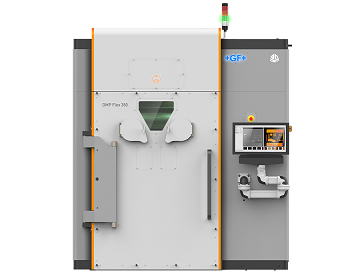
Selective Laser Melting, Electron Beam Melting, and Direct Metal Laser Sintering are the type of metal Powder Bed Fusion metal 3D technologies. These technologies utilize an electron beam or laser to fuse and bond powdered metal particles to create a solid metal part.
Advantages of Metal Powder Bed Fusion
Metal bed fusion technology has the following advantages.
- Highly precise.
- Complex geometries can be manufactured.
- A variety of materials can be used.
- 3D printed parts are similar to parts manufactured using traditional manufacturing operations.
Disadvantages of Metal Powder Bed Fusion
Metal bed fusion technology has the following disadvantages.
- High initial investment.
- High material cost.
- Manual post-processing operations are required.
- Relatively small build volumes.
2. Direct Energy Deposition
Direct Energy Deposition (DED) metal 3D printing process utilizes plasma arc, laser, or electron beam to create solid geometries from feed wire or metal powder. Compared to the powder bed fusion process, DED material (powder or wire) blows out of a print head onto the part and an energy source (laser or electron beam) from the print head is used to melt and fuse material.
This process is very similar to welding. Therefore it is widely used for repairing and adding more features to existing metal parts.
Advantages of Direct Energy Deposition Metal 3D Printing
Direct energy deposition metal 3d printing technology has the following advantages.
- Large build volume.
- Wire DED is a very affordable metal 3D Printing.
- Support material is not required.
- Widely used to repair existing damaged parts.
Disadvantages of Direct Energy Deposition Metal 3D Printing
Direct energy deposition metal 3d printing technology has the following limitations.
- Poor surface finish.
- High initial investment.
- Precise and small details are difficult to manufacture.
3. Binder Jetting
Binder jetting is a type of metal 3D printing process where a binder is deposited onto the powder bed to bond powder material to form solid layer by layer. Full-color sandstone, silica sand, stainless steel and Inconel alloy, tungsten alloy are used as binder jetting materials.
This additive manufacturing process is used to manufacture metal prototypes, sand casting cores, and molds.
Advantages of Binder Jetting
Binder jetting metal 3d printing technology has the following advantages.
- Low Cost.
- Supports are not required.
- Larger Build Volume because warpage is not an issue.
- Complex metal geometries can be manufactured.
- Fast Printing.
Disadvantages of Binder Jetting
Binder jetting metal 3d printing technology has the following limitations.
- Limited material options.
- High initial investment.
- Post-3D printing operations such as de-binding and furnace sintering are required.
4. Metal Extrusion
Similar to FDM, the Metal Extrusion process utilizes a filament rod consisting of polymer and metal powder that is extruded through a nozzle layer by layer. After extrusion, post-processing operations such as removal of binder and sintering are used to create fully solid metal parts.
Metal extrusion 3D printing process can be used for 3D printing quick functional metal prototypes, creating jigs and fixtures, etc. This process is introduced to make metal 3D printing affordable similar to FDM 3D printing for plastic parts.
Advantages of Metal Extrusion Process
- Very Low Cost
- Low investment
- Functional Prototypes
Disadvantages of Metal Extrusion Process
- Rough surface finish.
- Complex de-binding and sintering process.
- Limitations on the type of geometries that can be manufactured.
Metal 3D Printer Technology Selection Matrix
You should conider the following points for the selection of metal 3D printer for your application:
- Define the part function
- Select the material
- Determine required mechanical properties
- Evaluate size and accuracy
- Estimate production volume
- Compare AM processes
- Select the machine
- Plan post-processing
- Calculate cost per qualified part
Adjust the importance of each requirement. The table will highlight the most suitable processes.
| Requirement | LPBF | EB-PBF | DED | WAAM | Binder Jetting | Extrusion |
|---|---|---|---|---|---|---|
| Accuracy | ★★★★★ | ★★★★ | ★★ | ★ | ★★★ | ★★★ |
| Surface Finish | ★★★★★ | ★★★ | ★★ | ★ | ★★★ | ★★★ |
| Large Parts | ★★ | ★★ | ★★★★ | ★★★★★ | ★★★ | ★★ |
| Repair Existing Parts | ✗ | ✗ | ★★★★★ | ★★★ | ✗ | ✗ |
| Production Volume | ★★★ | ★★ | ★★ | ★ | ★★★★★ | ★★★ |
| Titanium | ★★★★★ | ★★★★★ | ★★★★ | ★★★ | ★ | ✗ |
| Low Cost Entry | ✗ | ✗ | ✗ | ✗ | ★★★ | ★★★★★ |
Metal 3D Printer available Options
A very limited number of metal 3D printer options are available in the market because it is a relatively new technology and the cost is also very high. Following is the list of metal 3D printers available in the market.
Powder Bed Fusion
LPBF : Laser Powder Bed Fusion
Main category for high-precision metal 3D printing.
| Manufacturer | Example Machine Families | Typical Positioning |
|---|---|---|
| EOS | EOS M 290, M 300, M 400 series | Industrial production |
| Nikon SLM Solutions | SLM 125, SLM 280, SLM 500, NXG XII 600 | Production, aerospace, large format |
| Renishaw | RenAM 500 series | Precision industrial AM |
| TRUMPF | TruPrint 1000, 2000, 3000, 5000 | Industrial production |
| Colibrium Additive | M Line, M2, Spectra | Aerospace and industrial |
| Velo3D | Sapphire family | Complex geometries and production |
| Farsoon | FS series | Industrial and large format |
| Eplus3D | EP-M series | Large-format LPBF |
| BLT | BLT-S series | Industrial LPBF |
EB-PBF : Electron Beam Powder Bed Fusion
Particularly suitable for titanium and high-temperature materials.
| Manufacturer | Machine / Technology |
|---|---|
| Colibrium Additive | Arcam EBM systems |
| GE Aerospace | EBM technology and systems |
DED : Directed Energy Deposition
| Manufacturer | Example Systems |
|---|---|
| Nikon | Laser DED systems |
| Optomec | LENS systems |
| Meltio | Meltio Engine, M450 |
| WAAM3D | WAAM systems |
| Sciaky | Electron Beam DED systems |
| DMG MORI | LASERTEC DED systems |
DED is especially attractive for large parts, high deposition rates, adding material to existing components, and repair applications.
WAAM : Wire Arc Additive Manufacturing
WAAM is particularly suitable for very large metal components and structural applications.
- WAAM3D
- MX3D
- AML3D
- Robotic-system integrators
Typical application: large steel, aluminum, or titanium structures.
Metal Binder Jetting
| Manufacturer | Example Machine | Typical Positioning |
|---|---|---|
| HP | Metal Jet S100 | Development and production |
| Desktop Metal | InnoventX, X25Pro, X160Pro | Production-oriented binder jetting |
| Markforged | Metal binder-jet ecosystem | Metal production |
Metal Extrusion
| Manufacturer | Example Machine / Technology |
|---|---|
| Markforged | Metal X |
| Desktop Metal | Studio / extrusion-based systems |
| 3DGence | Metal extrusion systems |
We will keep updating more information on metal 3D printers. Please add your suggestions, comments, or questions on metal 3D printer in the comment box.
Add a Comment